
DELTA FORCE DIPLOMACY
The why of the 21stC version of 'Gunboat Diplomacy'

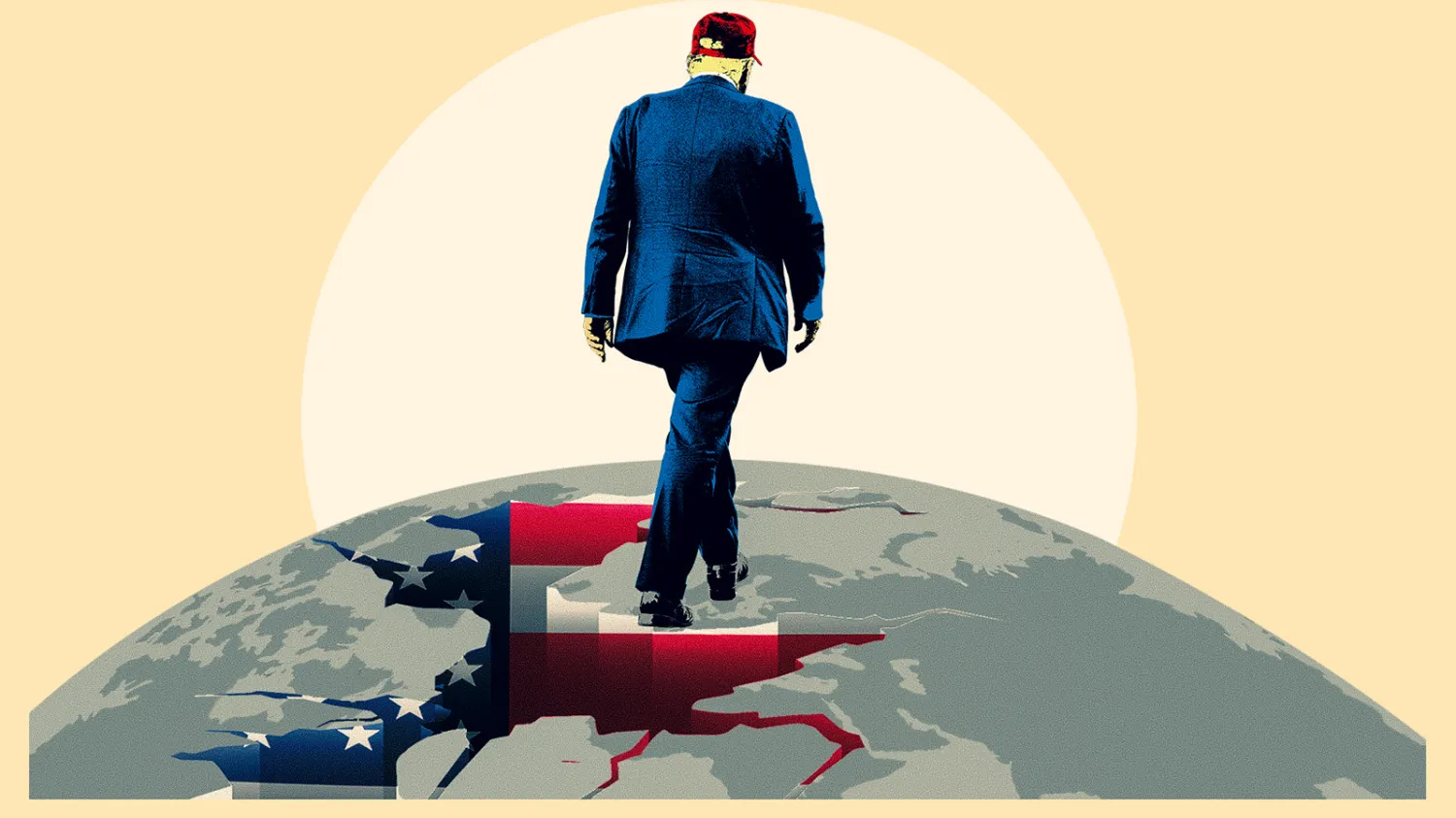
President Trump’s actions in Venezuela, his threats to Colombia, and desires for Greenland are rational, strategic, and considered. They may also be arrogant, insulting, and imperial, but that does not make them illogical.
Because many people think that Trump is a bad joke, they mistake the mangled syntax that emerges from his mouth as complete nonsense. It may frequently be unpleasant, but not of all of it is idiocy.
The logic of the administration’s actions is rooted in energy security, future proofing supply chains, (especially minerals) and in the strategic denial of competitors. In the 19thC access to coal was crucial and fuelled gun boat diplomacy. In the 20thC the location of fossil fuels was central to economic and military policymaking. In this century critical minerals have joined them. A new ‘great game’ is being played out across the world.
Securing access to critical minerals such as copper, lithium, and graphite is essential for a country’s economic welfare and security. They are needed for, amongst other things, green energy, batteries, drones, semi-conductors, precision guided weapons, quantum technologies (a coming force multiplier), and the wiring for AI data centres. Their importance will grow in tandem with the competition to acquire them.
Now factor in that we have moved on from the post-Cold War era. No single event ruptured the old order. It faded as China rose and Russia reconstituted itself. Simultaneously, globalisation was lifting many boats but sinking others while mass migration was changing politics in the countries to which people were moving. The 2016 election of Donald Trump was a sign that the era of liberal internationalism was ending. His replacement by Joe Biden in 2020 was only a speed bump in the direction of travel. In his second presidency, Trump has shifted into 2.0 gear, accelerated, and barrelled into Caracas.
Venezuela not only has the world’s largest oil reserves, it holds significant reserves of metals including nickel and uranium as well as the mineral bauxite. The latter is used to make aluminium, but a byproduct is gallium which is crucial for producing advanced semiconductor chips. China produces almost all of the world’s gallium and in the past has restricted sales to the U.S.
If the Trump administration succeeds in controlling the country it gains access to all this. Venezuelan oil is of a similar type to Russia’s, and the US could offer it an alternative to Russia’s customers thus undermining Moscow. Washington would also be able to cut oil supplies to Cuba - an island which sits at the entrance to the Gulf of Mexico and the port of New Orleans which is critically important to the US economy.
Washington’s strategy to secure minerals will not end in Venezuela. Latin America holds 60% of the world’s lithium reserves, 40% of its copper reserves, and many other metals the length and breadth of the region. Argentina, Bolivia, and Chile have the most lithium while Chile and Peru have the lion’s share of copper.
And who buys most of this? China. More than 50% of Chile’s mineral exports go to China as does most of Peru’s copper. China is a huge investor in Brazil’s rare earth industry and is its major trading partner. Beijing, which read the future long before Washington, has spent this century investing in Latin America’s mining sector to get the stuff out of the ground, and in railways and ports to get it China to be refined. The Russians are also in Latin America although more involved in oil and gas than minerals. There’s another actor in town – Iran, which has invested in embedding its proxy militia Hezbollah in South America where it has conducted terror attacks and become involved in the drugs trade.
The above brings us back to the future - to 1823. In recent weeks White House officials have begun stressing the phrase ‘our hemisphere’. Near Trump’s desk in the Oval Office hangs a portrait of President Monroe who, in 1823, set out his doctrine that foreign powers should stay out of the USA’s backyard – Latin America. In 1904 President Roosevelt updated the Monroe Doctrine with a corollary stating that the U.S. may be forced “however reluctantly, in flagrant cases of such wrongdoing or impotence, to the exercise of an international police power”.
The Administration’s defence of its actions last week in Venezuela was an echo of those words. We should not be surprised. December’s 33-page National Security Strategy document told us of Trump’s intentions. Page 5 says “we want a Hemisphere that remains free of hostile foreign incursion or ownership of key assets… In other words, we will assert and enforce a “Trump Corollary” to the Monroe Doctrine”.
It’s all in there: ‘no competing powers physically dominant in our Hemisphere…most advanced tech sector…AI, biotech, and quantum computing…military dominance for future generations.’ What’s missing is any reference to international law.
This is the background to the events in Venezuela, and to the administration’s global strategy. It is a break with the post-war international system that America built and then maintained in the post-Cold War era. The new thinking believes America’s success is unrelated to that of other countries. It says the American military presence should shift away from regions whose significance to national security has declined. Regional security must be paid for by regional countries. It asks that if Russia can’t even take Kyiv, why are 350 million Americans subsidising 500 million Europeans to defend themselves against 140 million Russians?
To succeed in this new era the White House believes the USA’s position as the world’s leading tech and military power must be maintained. To do that, you not only need to secure supplies of minerals, but reduce the supply to your rivals.
Which brings us to Greenland which American leaders have long wanted to control. President Truman tried to buy it in 1953. His rationale then was similar to Trump’s now –geography. It is the shortest route to the US’s east coast for Russian submarines and missiles; complete control would allow better monitoring and the ability to counter Russian and Chinese interest in the Arctic and the emerging Northern Sea Route. Greenland also has vast natural resources including rare earth materials although getting to them is difficult. It even has anorthosite which used as moon-dust for training astronauts. As an aside – space is another arena in which the race for resources is being played out. But military action in Greenland? It seems unlikely. Nuuk is Greenland’s capital, not a threat by Trump.
Washington’s interests are not confined to Latin America and Greenland. As with all major industrialized powers it is involved in the new ‘scramble for Africa’ and its minerals. Here again China has the lead. Areas of competition include graphite in Mozambique, Madagascar and Tanzania, and copper in the DRC and Zambia. European and American companies have built the ‘Lobito Corridor’ to get the resources west to Angola’s coast and on into the Atlantic while China has financed a similar scheme but heading east to Tanzania and the Indian Ocean.
Last November President Trump hosted the leaders of Uzbekistan, Kazakhstan, Kyrgyzstan, Tajikistan, and Turkmenistan at the White House. Top of the agenda was Central Asia’s large deposits of uranium, tungsten, copper, and lithium. The previous month the US concluded an $8.5 billion deal with Australia for access to its wealth of critical minerals.
Simultaneously the Americans are moving to undermine China’s hold on the mineral supply chain. It controls most of the refining of the globe’s critical minerals. Washington hopes to increase its own refining capacity and establish partnerships elsewhere.
These critical minerals are what is required for new technology in this new era. Trump is both a symptom and cause of these times. The Don of a new age - Delta Force Diplomacy.
From an article first published in the Sunday Times News Review section.
What I’m reading: Secret Maps. How they Conceal and Reveal the World. (British Library)
What I’m watching: The Night Manager. (BBC)
Spot on. Good article. My only caution is that the mining-to-refining gap for REE is enormous compared with coal or oil and gas. REE processing is a spectacularly messy business best suited to wilderness locations in countries with deeply relaxed environmental rules. It is much more invasive than building an oil refinery or a coking plant. I could use many adjectives to describe EU environmental regulation (a field I've worked in for 25+ years) but "relaxed" is not one of them. I think that is part of the cold logic behind the US desire to "own" Greenland rather than exercise exclusive extraction rights on terms dictated by Greenlanders (which I believe would borrow heavily from the canon of EU environmental law). What you can get away with in West Texas (and certainly under this administration) you could not get away with in an arctic wilderness shaped by EU rules (or something similar to them).
Brilliant comprehensive article, distilling so much ‘chaos’ so cleanly 😅 your article connects closely to a short piece I’ve just written from a UK resilience angle, specifically how deep integration with allied systems can create structural exposure to risks we don’t fully control. If it’s of interest, please do take a look 🌷